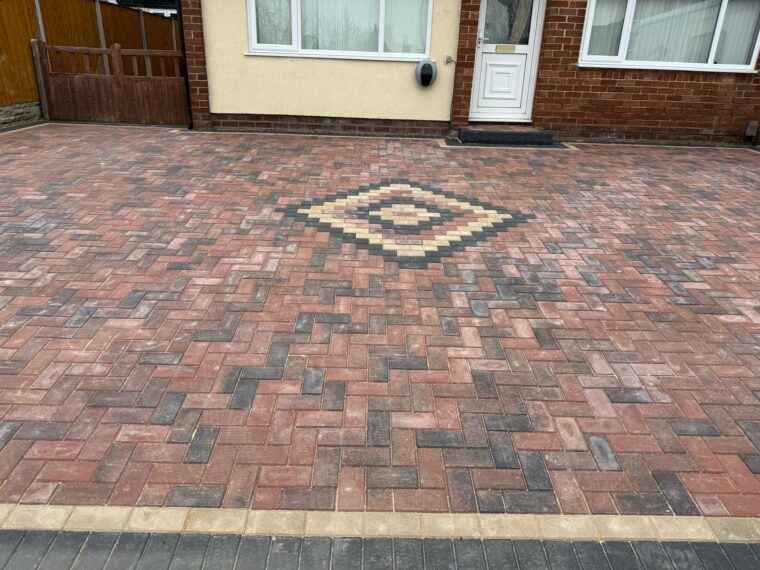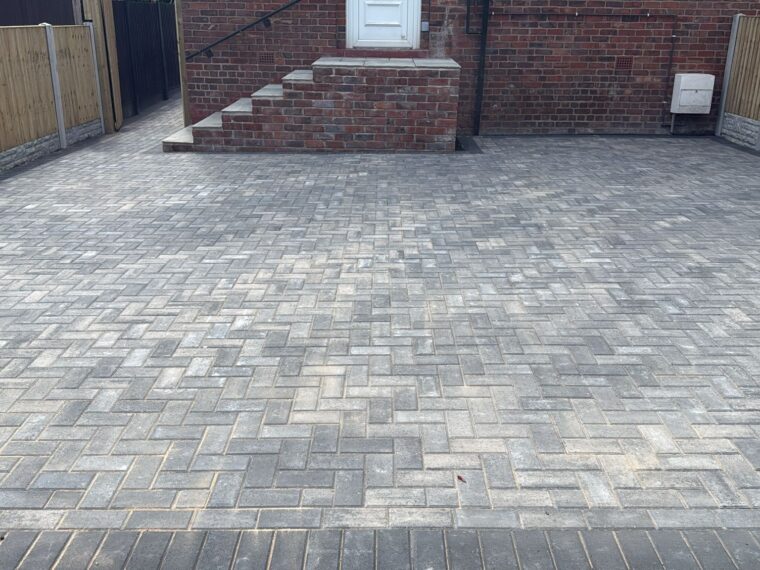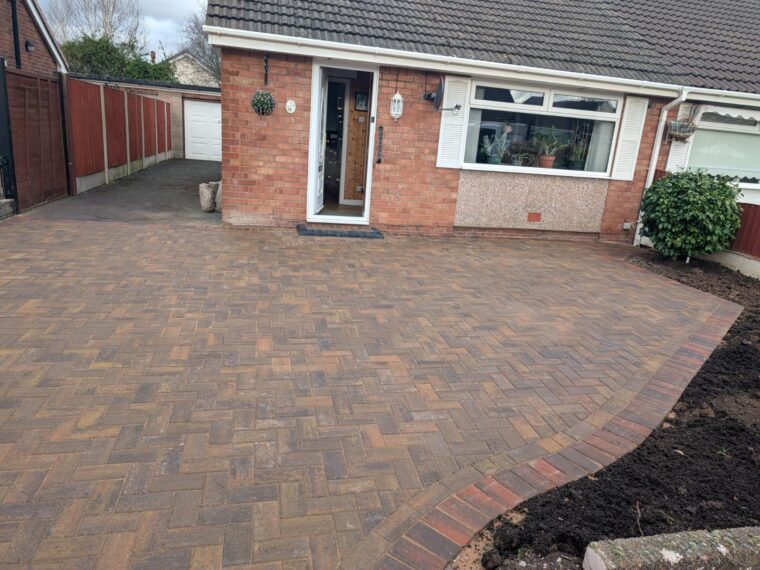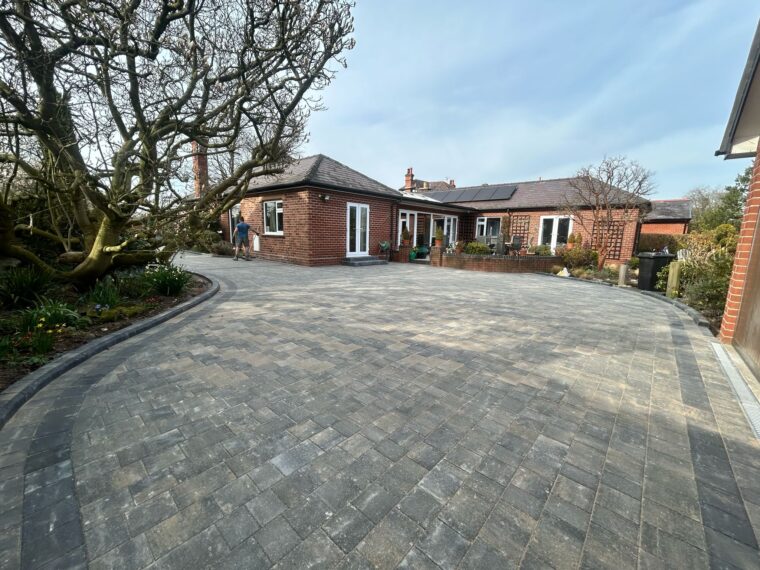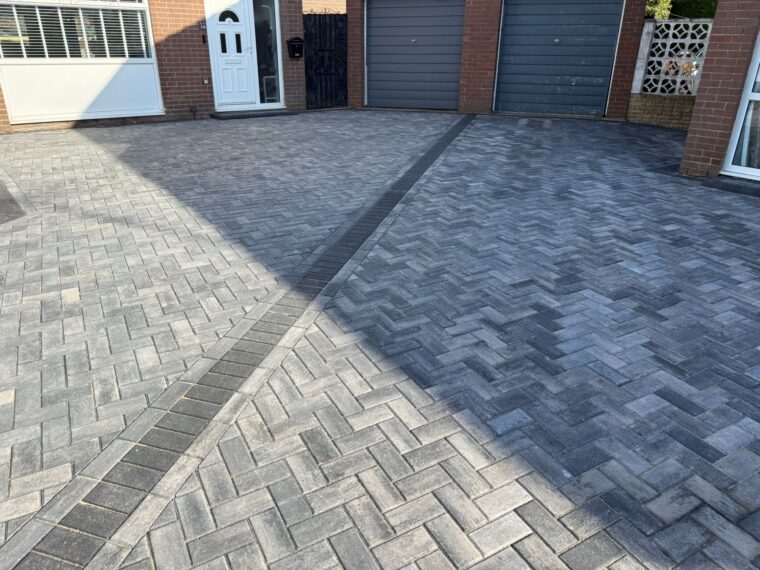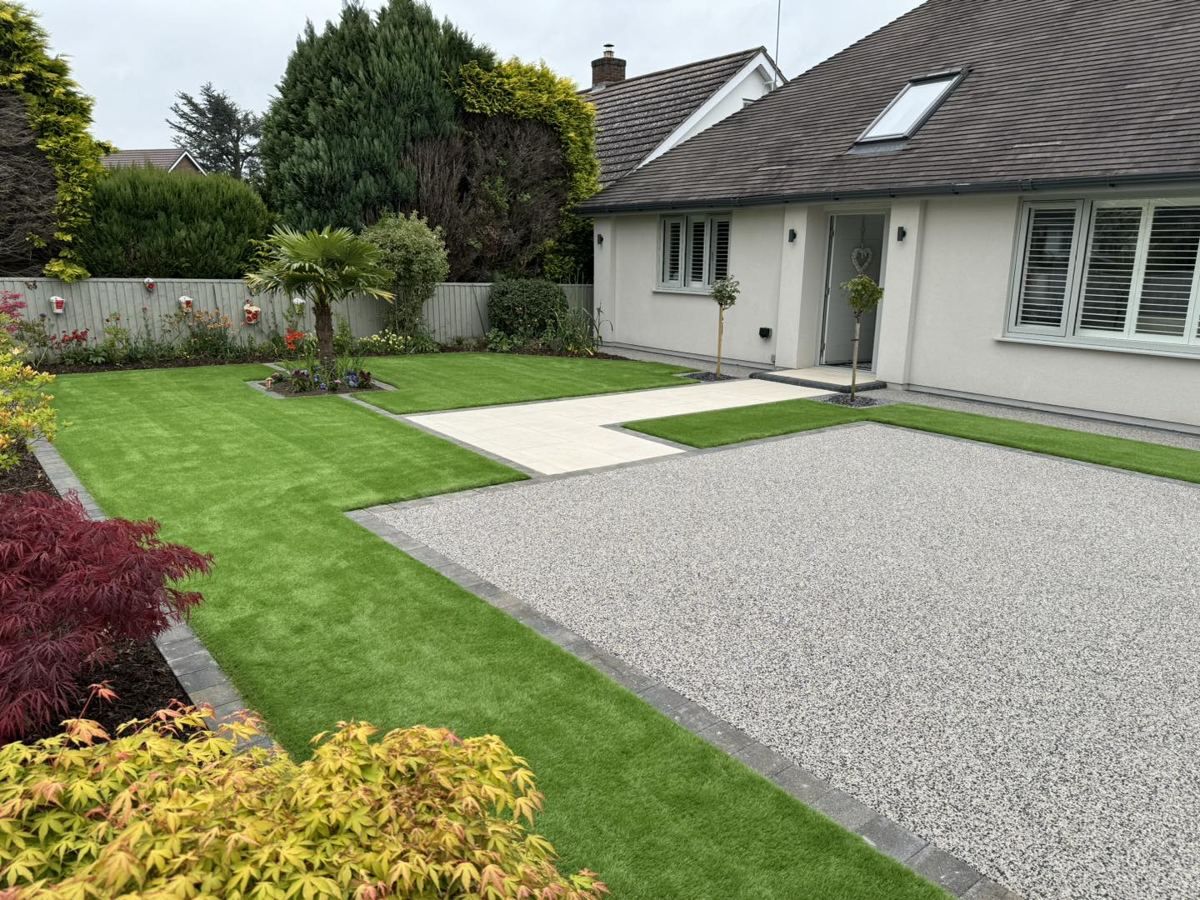
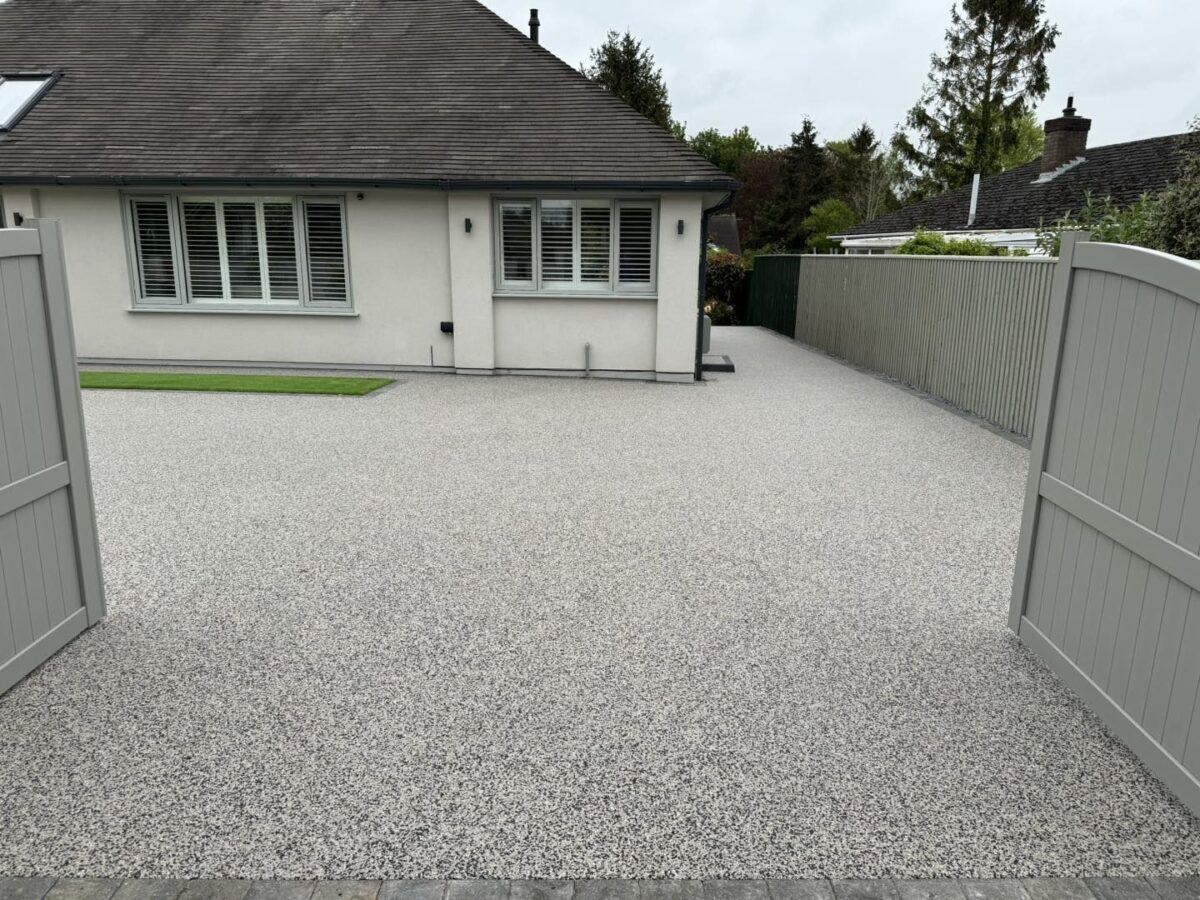
These are the two driveways we’re asked about most. There’s no single right answer: it depends on the house, the drive and how you use it. Here’s how they compare.
How do they compare at a glance?
| Block paving | Resin bound | |
|---|---|---|
| Look | Classic, textured, lots of patterns | Smooth, seamless, natural stone colours |
| Drainage | Standard isn’t permeable; permeable block is | Permeable |
| Maintenance | Sweep, wash, top up joint sand, weed now and then | Sweep and occasional pressure wash |
| Repairs | Lift and replace individual blocks | Patch repairs possible but can show |
| Slopes | Very good | Good on gentle slopes |
| Lifespan | Many years on a good base | 15–25 years with proper care |
Which looks better?
That’s down to taste. Block paving gives you pattern (herringbone, basketweave, stretcher bond), borders and feature details, and comes in reds, brindles, buffs, greys and charcoals. It suits almost any house, especially older brick properties.
Resin bound is smooth and even, with a natural stone look. It suits modern homes and clean designs, and it can follow curves easily because it’s trowelled by hand. A lot of people combine the two, with a resin centre and a block paved border.
Which is better for drainage?
Resin bound is permeable: rain drains straight through to the base. Standard block paving isn’t permeable, but permeable block paving is available, with wider joints and a free-draining base. Either permeable option means you won’t normally need planning permission for the driveway. See our guide to driveway planning permission.
Which needs less maintenance?
Resin, slightly. A regular sweep and an occasional pressure wash keeps it looking fresh, and there are no joints for weeds. Block paving needs the odd top-up of jointing sand and occasional weeding, but it’s still low maintenance.
Which is easier to repair?
Block paving, clearly. If a section is damaged, stained by oil or dug up for a utility repair, the blocks can be lifted and relaid. Resin can be patched, but a patch can be visible.
Which is better on a slope?
Block paving grips well and holds its shape on steeper drives. Resin bound works on gentle slopes, but on steep drives we’ll usually suggest block paving or tarmac. More in our guide to driveways on a slope.
Can resin go over my old driveway?
Sometimes. If your existing tarmac or concrete is solid and stable, resin can often be laid over it. Block paving always needs digging out and a new base.
So which should you choose?
- Go for block paving if you like a traditional look, want a pattern or border, have a steep drive, or want the easiest repairs.
- Go for resin bound if you want a smooth modern finish, need a permeable surface, want no loose stones, and like the idea of minimal upkeep.
Still unsure? We bring samples of both to the survey and can show you photos of each on similar houses.