We lay a lot of sloping drives, particularly in Frodsham, Helsby, Heswall, Buckley and Mold, where plenty of homes sit on a hill. Here’s what works and why.
Which surfaces work best on a slope?
Block paving
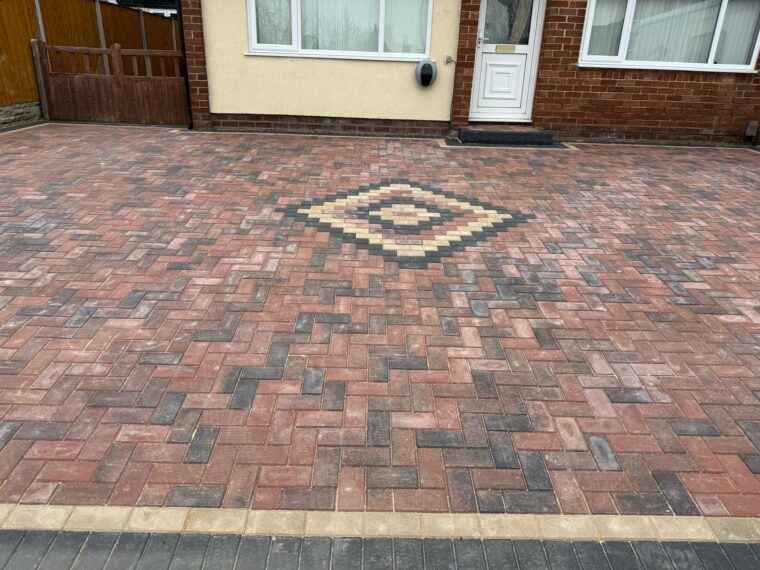
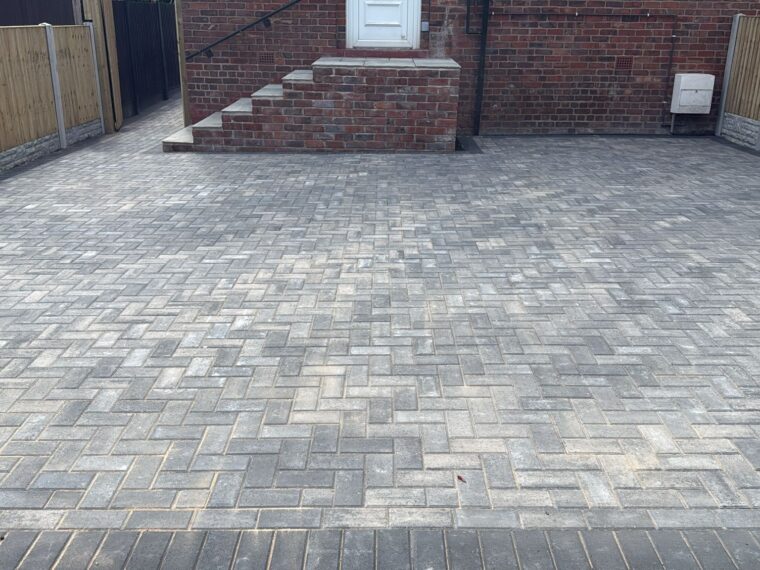
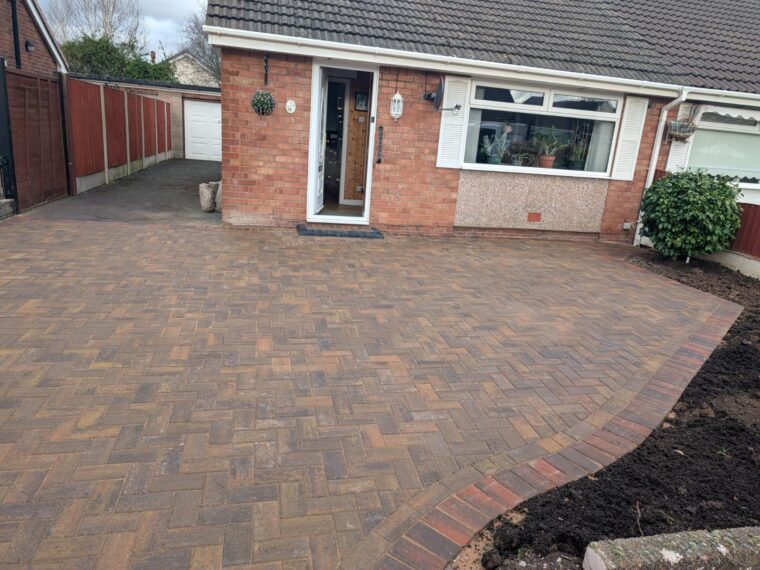
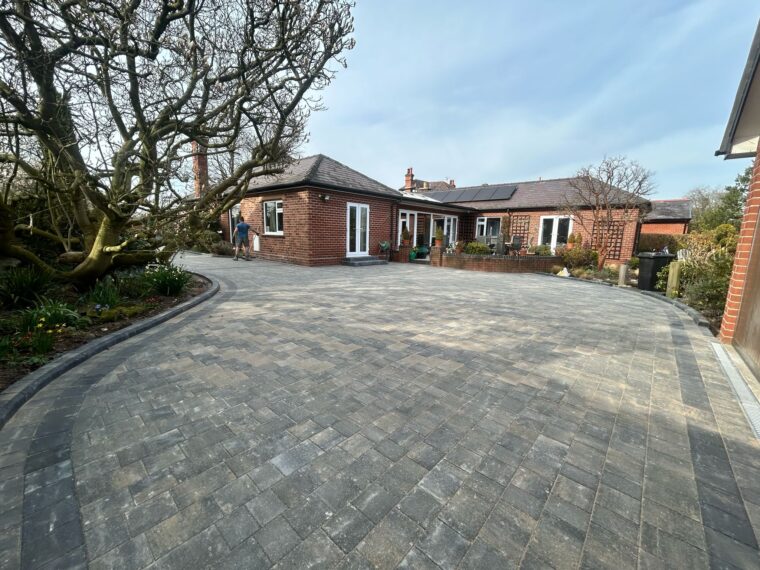
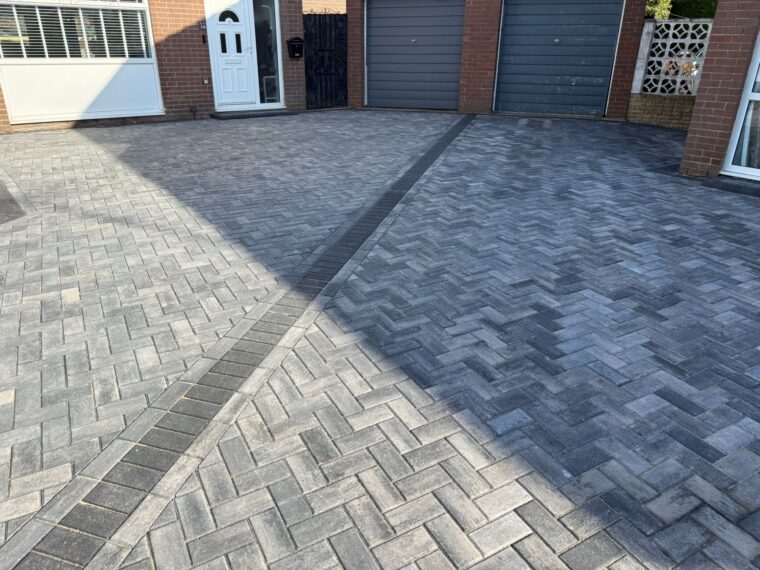
Block paving is excellent on slopes. The blocks lock together, especially in a herringbone pattern, and the texture gives good grip. It can also be laid with steps, landings and drainage channels built in.
Tarmac
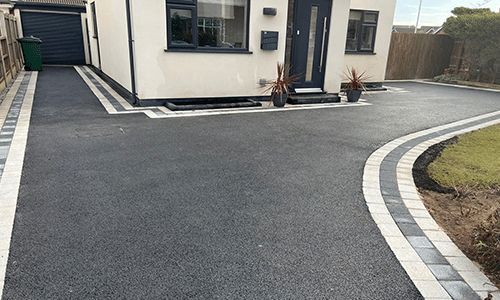
Tarmac grips well, stays put and is good value on long drives. It’s one of the most common choices for steep or long rural drives. A block paved border keeps the edges neat.
Resin bound
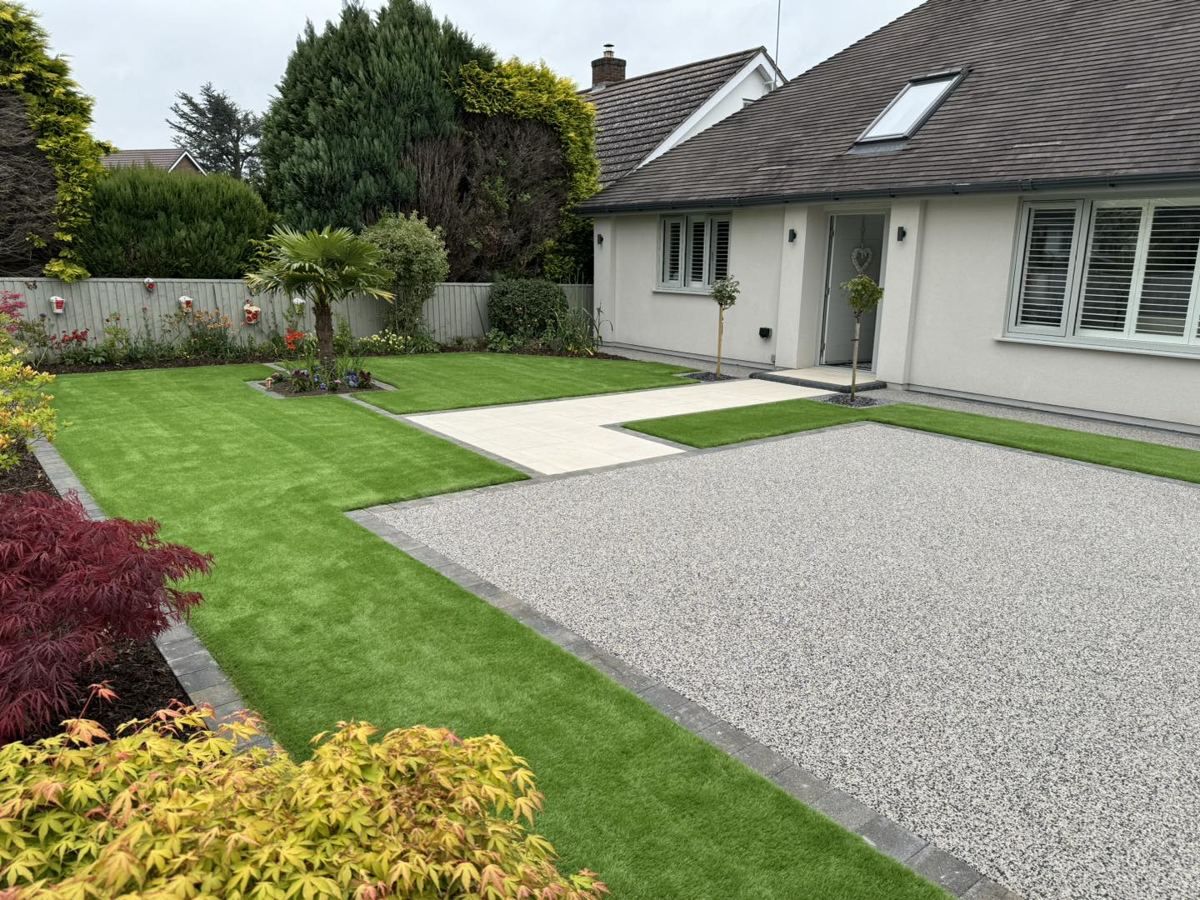
Resin is fine on gentle slopes and gives a smooth, permeable finish. On steeper gradients we’ll usually recommend block paving or tarmac instead.
Imprinted concrete
Imprinted concrete can be laid on a slope, but the finish can be slippery in the wet and needs careful falls and drainage.
Gravel
Loose gravel moves under tyres and washes downhill in heavy rain, so it’s a poor choice for anything more than a slight slope.
How should water be handled on a sloping drive?
Water picks up speed on a slope, so it has to be planned for:
- Falls away from the house wherever possible, or at least not straight at the garage door.
- A channel drain across the drive where it meets the house, garage or road.
- A soakaway or permeable area for the water to go to, which also keeps you within the planning rules.
- Permeable surfaces such as permeable block paving or resin bound, so less water runs off in the first place.
What if the drive slopes towards the house?
This is common, and it’s fixable. We’ll set the levels so the drive falls to a channel drain before it reaches the house or garage, and make sure the finished surface sits below the damp-proof course.
Do you need steps or retaining walls?
On steeper plots, a path with steps alongside the drive, or a retaining wall to level part of the garden, often makes the whole frontage more usable. We can build those as part of the same job.
Our advice
Every slope is different, so we always look at it in person. On the survey we’ll measure the gradient, look at where the water goes now and recommend the surface that suits your drive, not just the most popular one.